Dutch Baby Pancake
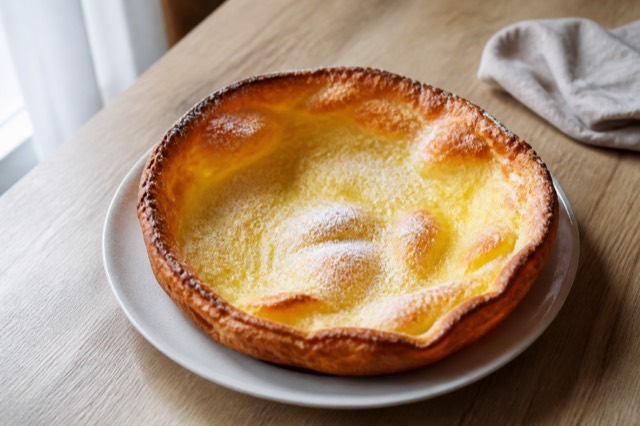
One batter, one pan, no flipping — it climbs the sides of the skillet in the oven and collapses into something custardy and dramatic.
Method
- Put a 10-inch cast-iron or oven-safe skillet on the middle rack and heat the oven to 425°F (220°C). Let the pan heat for a full 10 minutes.
- Blend the eggs, milk, flour, sugar, salt and vanilla until completely smooth — about 30 seconds in a blender, or a vigorous minute by hand.
- Carefully pull out the hot pan, add the butter and swirl until it melts and foams, coating the sides.
- Pour the batter straight into the center and return to the oven immediately.
- Bake 18–20 minutes without opening the door, until puffed high and deeply golden at the edges.
- Serve within a minute or two — a squeeze of lemon and a dusting of powdered sugar is the classic finish.
Cook's notes
- Room-temperature eggs and milk are the whole trick; cold batter in a hot pan won't climb.
- It will deflate as it cools. That's supposed to happen — carry it to the table fast.
- Opening the oven partway through collapses it early. Trust the timer.
What this costs to make
$0.29 per serving · $1.16 for the whole recipe (4 servings)
| Eggs, grade A large | $0.55 |
|---|---|
| Butter, stick | $0.37 |
| Milk, whole | $0.14 |
| Flour, all-purpose | $0.08 |
| Sugar, white | $0.03 |
| Total (priced items) | $1.16 |
Priced 5 of 8 ingredients using U.S. average retail prices for 2026-07, published by the Bureau of Labor Statistics via FRED. Not included: fine salt, vanilla extract, Lemon wedges and powdered sugar. These are national averages — not what you will pay. Store, region and week all move them.
Why this works
The climb is steam. A very hot pan flashes the liquid in a thin batter to steam faster than the structure can set, forcing it up the sides; the egg then sets in that shape. Room-temperature eggs and milk matter because cold batter hitting the pan cools it below the point where this happens.
If it goes wrong
No rise almost always means a pan that wasn't hot enough or batter straight from the fridge. A dense, eggy base means under-blended batter — it needs to be genuinely smooth, not just combined.
Make it your own
Savoury versions work well: drop the sugar, add Gruyère and herbs. Sliced apples cooked in the butter before the batter goes in makes a version close to a German apple pancake.
Storing and reheating
None — this is the least storable thing on the site. It deflates within two minutes and is markedly worse cold. Make it when you're ready to eat it.
More breakfast ideas
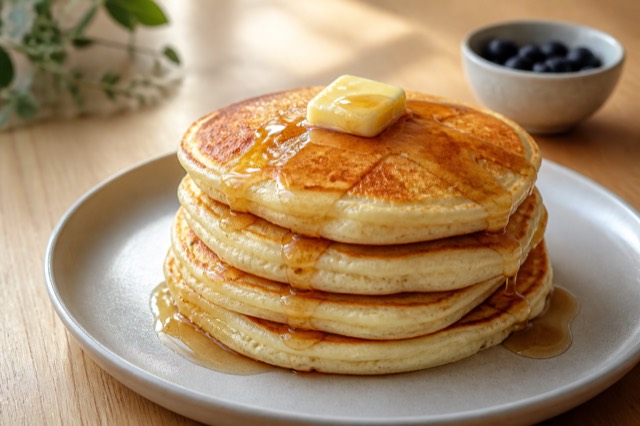
Fluffy Buttermilk Pancakes
Tall, cloud-soft pancakes with crisp golden edges. The buttermilk and a rested batter do all the heavy lifting.
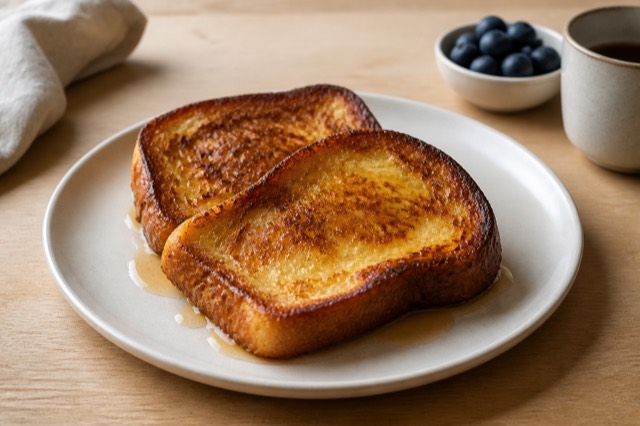
Classic French Toast
Custardy in the middle, caramelized at the edges. Day-old bread is the move, and a splash of vanilla makes it sing.
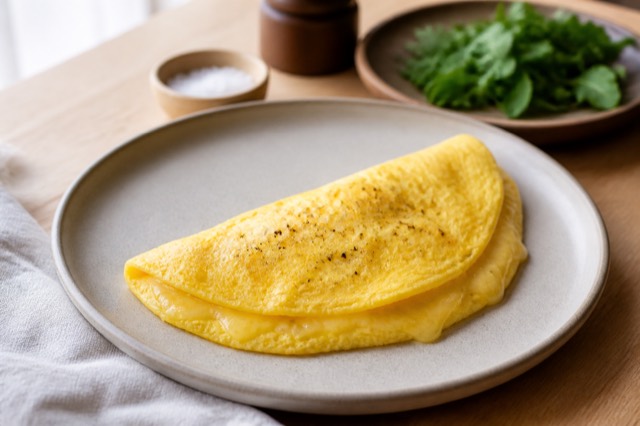
The Perfect Cheese Omelette
Soft, just-set, and folded around a melty middle. Low heat and constant motion turn three eggs into something French-bistro good.