The Perfect Cheese Omelette
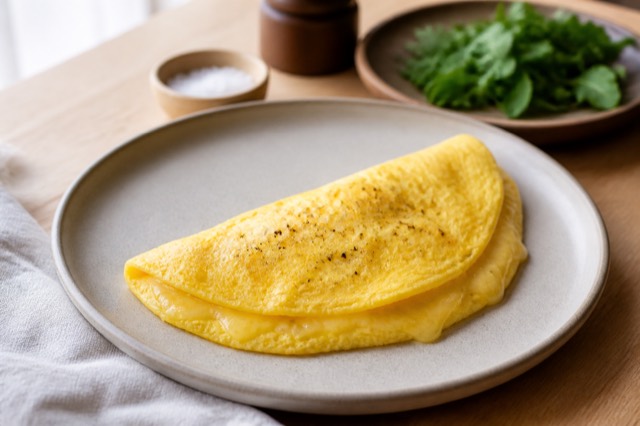
Soft, just-set, and folded around a melty middle. Low heat and constant motion turn three eggs into something French-bistro good.
Method
- Beat the eggs with a pinch of salt until completely uniform — no streaks of white.
- Melt the butter in a nonstick pan over medium-low heat until foaming but not browning.
- Pour in the eggs. Using a spatula, stir in small circles while shaking the pan, 30–45 seconds, until you have soft curds with a still-wet surface.
- Stop stirring and let it set for 10 seconds. Scatter the cheese over one half.
- Tilt the pan and fold the omelette over the cheese. Slide onto a plate seam-side down.
- Top with chives and a crack of pepper. Eat immediately.
Cook's notes
- Take it off the heat while the top still looks slightly underdone — it keeps cooking on the plate.
- Room-temperature eggs cook more evenly.
- A rubber spatula and a good nonstick pan are the whole game here.
What this costs to make
$1.18 per serving · $1.18 for the whole recipe (1 servings)
| Eggs, grade A large | $0.55 |
|---|---|
| Cheddar cheese | $0.51 |
| Butter, stick | $0.12 |
| Total (priced items) | $1.18 |
Priced 3 of 5 ingredients using U.S. average retail prices for 2026-07, published by the Bureau of Labor Statistics via FRED. Not included: Salt and freshly ground pepper, Chopped chives. These are national averages — not what you will pay. Store, region and week all move them.
Why this works
Low heat keeps the egg proteins from tightening and squeezing out water, which is what makes an omelette weep and turn rubbery. Constant motion in the first 30 seconds creates small curds; stopping lets them set into a sheet you can fold.
If it goes wrong
Browning means the pan is too hot — an omelette should stay pale yellow. A tough, leathery texture is overcooking; pull it while the top still looks slightly wet, because it keeps cooking after it leaves the pan.
Make it your own
Cheese choice changes it entirely: Gruyère for nuttiness, goat cheese for tang, plain cheddar for the classic. Herbs go in at the fold, not the beat. A spoonful of crème fraîche in the eggs makes it richer and more forgiving.
Storing and reheating
Eat immediately. An omelette does not keep — the texture that took you five minutes to build is gone within twenty.
More breakfast ideas
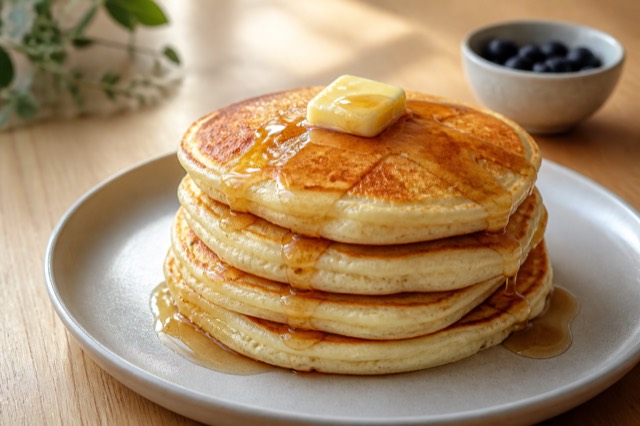
Fluffy Buttermilk Pancakes
Tall, cloud-soft pancakes with crisp golden edges. The buttermilk and a rested batter do all the heavy lifting.
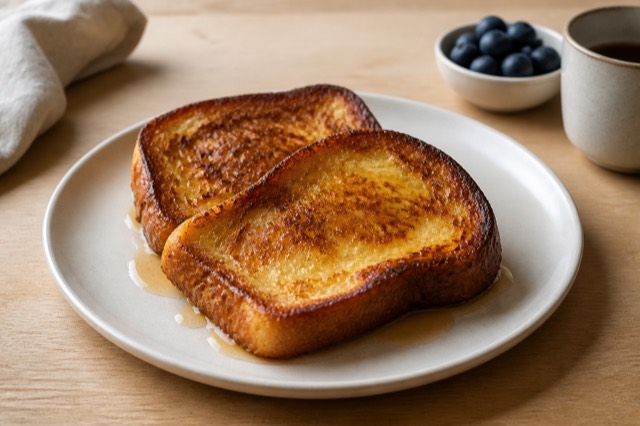
Classic French Toast
Custardy in the middle, caramelized at the edges. Day-old bread is the move, and a splash of vanilla makes it sing.
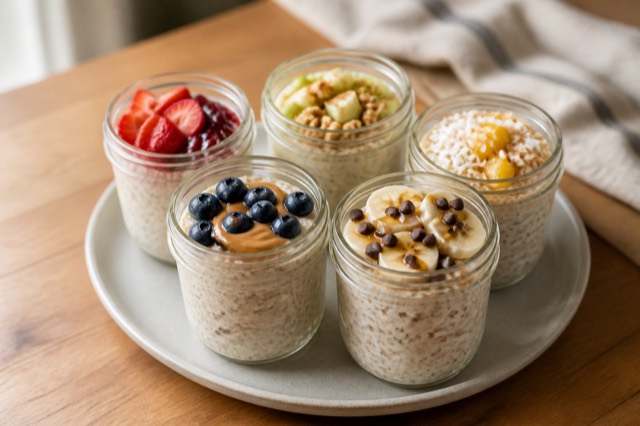
5-Minute Overnight Oats
Stir it tonight, grab it tomorrow. A creamy, no-cook base you can flavor a dozen ways for the whole week.