Soft Scrambled Eggs
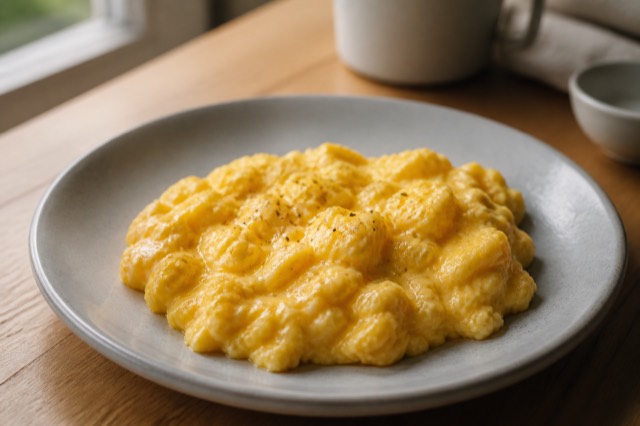
Small, glossy curds and a spoonable texture. The only real technique is low heat and the patience to keep stirring.
Method
- Beat the eggs thoroughly with a fork until no streaks of white remain — 30 seconds of real effort.
- Melt the butter in a nonstick pan over low heat. Low is not a suggestion.
- Add the eggs and stir constantly with a spatula, scraping the base and sides as they begin to set.
- Keep going for 5–8 minutes. The eggs will move from liquid, to loose, to soft folds. If they're setting fast, lift the pan off the heat and keep stirring.
- Pull the pan off the heat while they still look slightly underdone — carryover heat finishes them.
- Stir in the crème fraîche, season with salt, and scatter with chives.
Cook's notes
- Salt at the end. Salting raw eggs and letting them sit can make the finished curds weep.
- The eggs keep cooking in the pan after it leaves the heat, so plate immediately.
- Want big fluffy curds instead? Same method, medium heat, and stir far less often.
What this costs to make
$0.43 per serving · $0.85 for the whole recipe (2 servings)
| Eggs, grade A large | $0.73 |
|---|---|
| Butter, stick | $0.12 |
| Total (priced items) | $0.85 |
Priced 2 of 5 ingredients using U.S. average retail prices for 2026-07, published by the Bureau of Labor Statistics via FRED. Not included: crème fraîche or double cream (optional), Fine salt, Chives. These are national averages — not what you will pay. Store, region and week all move them.
Why this works
Egg proteins begin setting around 62°C (144°F) and squeeze out water as they tighten. Low heat keeps you below the point where that happens fast, and constant stirring breaks the setting protein into small curds instead of a sheet. That's the entire difference between soft scrambled and firm.
If it goes wrong
Weeping liquid on the plate means overcooking. Large rubbery curds mean the heat was too high. If it's setting faster than you can stir, lift the pan off the heat entirely — the residual warmth is enough.
Make it your own
Crème fraîche at the end stops the cooking and adds richness. Chives, tarragon or a little grated Parmesan all work. The French method uses a bain-marie and takes 20 minutes for an even silkier result.
Storing and reheating
Eat straight away. Scrambled eggs reheat badly at any temperature — they tighten and weep. This is a make-and-eat dish.
More breakfast ideas
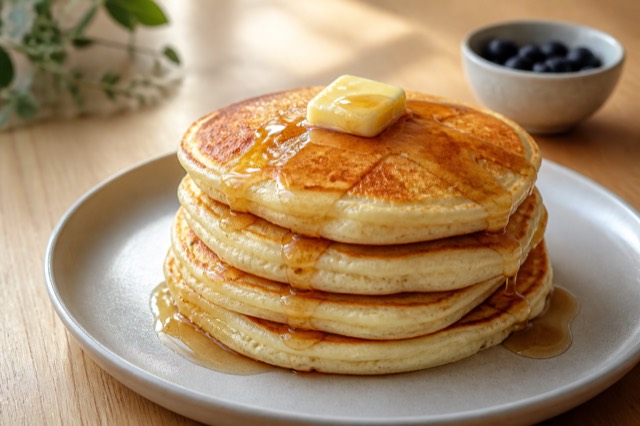
Fluffy Buttermilk Pancakes
Tall, cloud-soft pancakes with crisp golden edges. The buttermilk and a rested batter do all the heavy lifting.
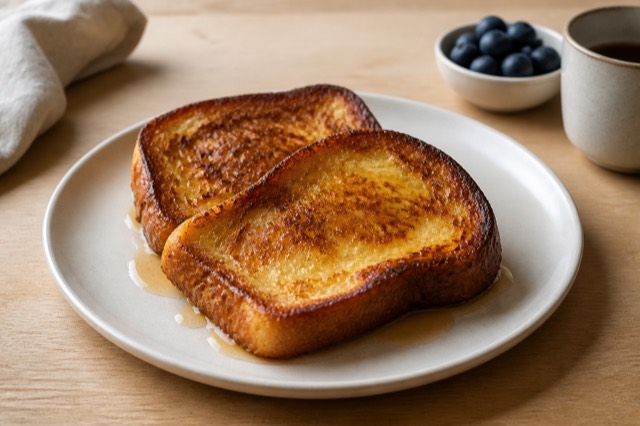
Classic French Toast
Custardy in the middle, caramelized at the edges. Day-old bread is the move, and a splash of vanilla makes it sing.
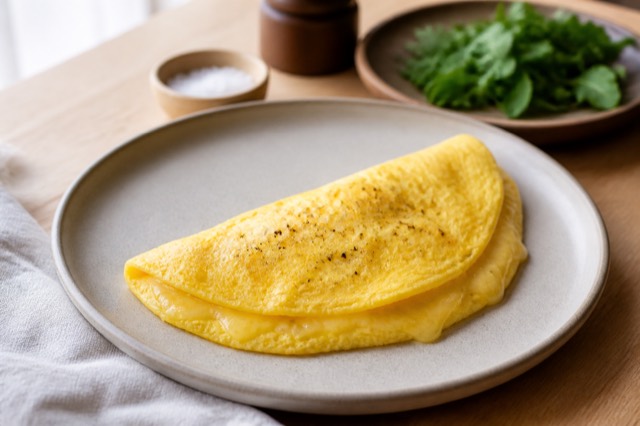
The Perfect Cheese Omelette
Soft, just-set, and folded around a melty middle. Low heat and constant motion turn three eggs into something French-bistro good.